A Visual Arts Teacher,
Photographer and Practitioner Researcher


The 5 Stages of CAS Learning
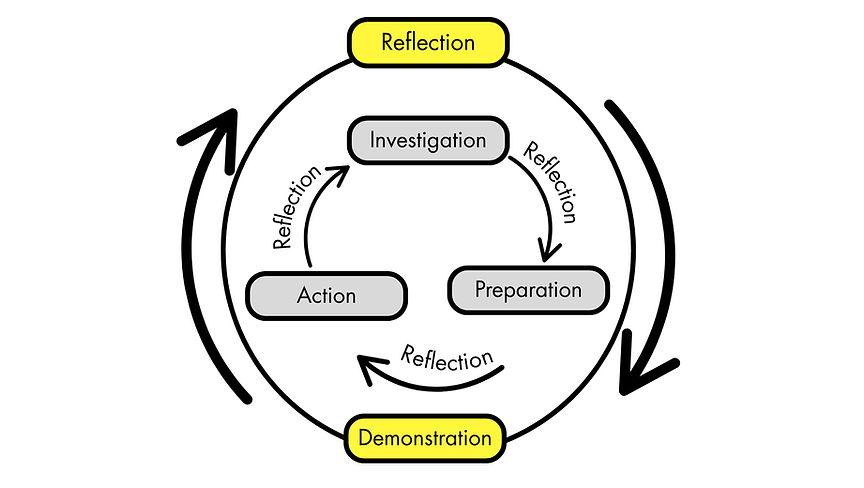
The CAS learning process follows five interconnected stages that guide students from curiosity to meaningful impact.
.png)

1. Investigation
Students explore their interests, skills, and talents to identify opportunities for CAS experiences and areas for personal growth. They clarify their purpose and, in the case of service projects, identify a real need to address.

2. Preparation
Students define roles and responsibilities, create an action plan with resources and timelines, and develop any skills required to successfully engage in the experience.

3. Action
Students put their plan into motion—often making decisions, solving problems, and adapting to challenges. This stage may involve individual work, partnerships, or group collaboration.

4. Reflection
Students think critically about their experiences: describing events, expressing feelings, raising questions, and generating ideas. Reflection can happen at any stage to deepen understanding, revise plans, and connect actions to the CAS learning outcomes. Reflection often sparks new action.

5. Demonstration
Students share what they have learned and accomplished—through their CAS portfolio, presentations, or informal discussions. Demonstration solidifies learning, celebrates achievements, and invites feedback from others.
The Importance of the CAS Stages
The CAS Stages provide a structure for students to:
-
Build self-awareness and resilience
-
Approach new and unfamiliar challenges
-
Develop communication and collaboration skills
-
Experience personal growth and recognize it in themselves
-
Apply multiple learning styles in authentic contexts
-
Embody the IB learner profile attributes
Through diverse individual and group experiences, CAS offers opportunities to pursue passions, express creativity, and engage with the community in meaningful ways.
A strong CAS program is personalized, shaped by each student’s interests, values, and background. It complements the academic demands of the IB Diploma Programme by fostering self-determination, collaboration, accomplishment, and enjoyment.
For many, CAS becomes a journey of discovery that inspires lifelong learning and can be truly life-changing.