


Cultural Experiences: Comparing & Contrasting Religious Architectures

Updated: Apr 15, 2025
The Importance of Respecting Cultures: Finding Differences and Similarities In Religious Architectures
Cultural Experiences - By Ms. Mila Vasconcelos
Culture is the soul of humanity. Through its different elements like Architecture, Religion, and Language, we can gain insight into the values, beliefs, and histories that shape communities. I’ve had the privilege of visiting remarkable religious venues and witnessing different rituals that celebrate human creativity and spirituality. Today, I will be focusing on how different religious places have been taken care of around the world, how the role of tourism has been impacting some of those sites, and what we can do to continuously preserve those places to keep traditions alive.
For my IBDP Visual Arts class, comparing and contrasting cultural elements becomes an essential exercise to understand art, and to foster respect for the differences and commonalities that unite us as global citizens. I try to generate a sense of belonging in each student when they share where they are, and at the same time raise awareness and respect towards cultures and religions that are not theirs. My goal is to share as many traditional art forms and cultural elements as possible, helping the students see the wonders that the world has to present, and providing inspirational sources to create their artworks.
When I moved to the Middle East and started to have the privilege to travel around the world visiting different places, I decided to not only take my time off for leisure or taking pictures for social media posts. Instead, I decided to learn more about each landmark I visited and make connections with the local history and traditions. The cultural element that caught my attention during my recent travels was Religion. This is such a difficult and complex theme, but at the same time, I find it extremely fascinating.
Below, I will talk about seven of the most compelling places I visited, discussing the importance of each one of these sites, its impact on the region which is inserted, the stories, curiosities, and how was my overall experience. Let's get started!
Religious Venues Around the World
Religious architecture tells stories of devotion, creativity, and history. Each of the places I’ve visited holds a unique significance, yet they share a common goal: to inspire and connect people to something greater than themselves. Let's start with the first venue, which is currently where I live, located in the city of Manama, Kingdom of Bahrain:

It was one of my brother's favorite cultural visits when he came to Bahrain for the first time, in 2023. With its beautiful white marble and contemporary design, the mosque exemplifies the essence of Islamic Art, featuring geometric patterns and a calm place for prayer. The Ahmed Al-Fateh Mosque is a cultural and spiritual landmark. Part of a larger Islamic center with a Qur’anic studies department and library, it was inaugurated in 1988 by the late Amir Sheikh Isa bin Salman Al-Khalifa. Spanning 6,500 square meters, the mosque accommodates up to 7,000 worshippers. One of the best moments we had the pleasure to experience was the kind offer of one of the employees of the mosque, who wrote our names, and my brother's girlfriend's name, in Arabic, showing his majestic handwriting. Also, we experienced a beautiful sunset, with the sunlight coming inside the mosque through the windows, creating a divine atmosphere, enhanced by the valuable information the local guide gave to us about the Five Pillars of Islam are the core principles that guide the faith and practices of Muslims worldwide:
Shahada (Faith): The declaration of faith, stating, “There is no god but Allah, and Muhammad is His messenger,” affirming belief in the oneness of God and Muhammad as His prophet.
Salah (Prayer): The performance of five daily prayers at prescribed times, serving as a direct link between the worshipper and Allah.
Zakat (Charity): The giving of a portion of one’s wealth to those in need, promoting social equality, and helping the less fortunate.
Sawm (Fasting): Observing fasting during the holy month of Ramadan, abstaining from food, drink, and other physical needs from dawn to sunset to cultivate self-discipline and spiritual reflection.
Hajj (Pilgrimage): The once-in-a-lifetime pilgrimage to Mecca, required of all Muslims who are physically and financially able, symbolizing unity and devotion to Allah.
The beautiful sunset, and the sunlight coming inside the Mosque, give this holy sense of calmness to the entire place.
The second religious place I visited was a Cathedral that I saw many times in French movies, located in a neighborhood surrounded by arts and other cultural elements that I love, like culinary, music, and handicrafts: The Sacré-Cœur, Paris - France
Located at the top of the Montmartre neighborhood, this basilica offers stunning views of Paris and serves as a symbol of faith and resilience, with its Byzantine-inspired design. When you enter the Basilica, you will find in front of you, on the monumental mosaic that caps the choir, Jesus Christ welcoming you with open arms.

One of the aspects of Christianity that may be surprising to people from different faiths is the idea of grace—the belief that salvation is not earned by our own actions but is instead a free and undeserved gift from God. Unlike religions where spiritual progress is tied to karma, reincarnation, or fulfilling religious obligations, Christianity teaches that God’s love is unconditional. The Bible says, "For by grace you have been saved through faith, and this is not from yourselves; it is the gift of God, not by works, so that no one can boast." (Ephesians 2:8-9).
This is beautifully reflected in the image of Jesus Christ at the heart of the Sacré-Cœur Basilica, where He stands with open arms, welcoming everyone, no matter their past. This idea of a personal relationship with God, rather than a path of enlightenment or a list of religious duties, is something that defines the Christian faith. Another fascinating aspect of Christianity that may be new to people from different faiths is the role of the Sacraments. Christianity—especially Catholicism—has seven sacraments, which are sacred rituals that mark important moments in a believer's spiritual journey:
Baptism: The sacrament of initiation that washes away original sin and welcomes a person into the Christian faith.
Confirmation: Strengthens a believer’s faith through the Holy Spirit, affirming their commitment to Christianity.
Eucharist: Catholics receive the Body and Blood of Christ in the form of consecrated bread and wine, deepening their spiritual connection to Jesus.
Reconciliation: A sacrament of forgiveness where believers confess their sins to a priest and receive absolution.
Anointing of the Sick: Provides spiritual and sometimes physical healing to those who are seriously ill or near death.
Marriage (Holy Matrimony): A sacred union between a man and a woman, reflecting the love of Christ and the Church.
Holy Orders: The sacrament in which men are ordained as deacons, priests, or bishops to serve the Church.
While these sacraments involve rituals, they are not seen as "requirements" to earn salvation, but ways to experience God’s grace more deeply. In contrast to religions where spiritual progress is based on personal effort, Christianity teaches that salvation is a gift from God. The sacraments are understood as encounters with this grace, rather than steps in a merit-based system.
To continue to appreciate the amazing view, and reflect more about the role of faith in my life, I climbed up to the Dome. To reach the top, you must climb 300 steps—and there is no elevator! The climb is challenging, but the reward is a spectacular panoramic view of Paris, including the Eiffel Tower, Montmartre, and beyond. The narrow, winding staircase adds to the experience, making it feel like a journey through history before reaching one of the most breathtaking viewpoints in the city. I was filled with the joy of having as my company my best childhood friend and her family. It made this moment very special! And one more time, the sunlight was cutting the sky, illuminating the Eiffel Tower at a distance. As their official website says, "You will not regret coming all the way up there!"
I have written other articles about Turkey, and by now, you probably know how much I admire this country and its people. However, one visit in particular left a lasting impact on me, as a traveler and researcher of religion and culture. Looking back, I realize that my deep fascination with studying religion may have truly begun on this very day. Let me explain why.
The Hagia Sophia, in Istambul - Turkey is the perfect example of religious coexistence. This place has transformed from a church to a mosque and now serves as a museum. Its domes, mosaics, and architectural innovations demonstrate how cultures can layer and enrich one another over time.
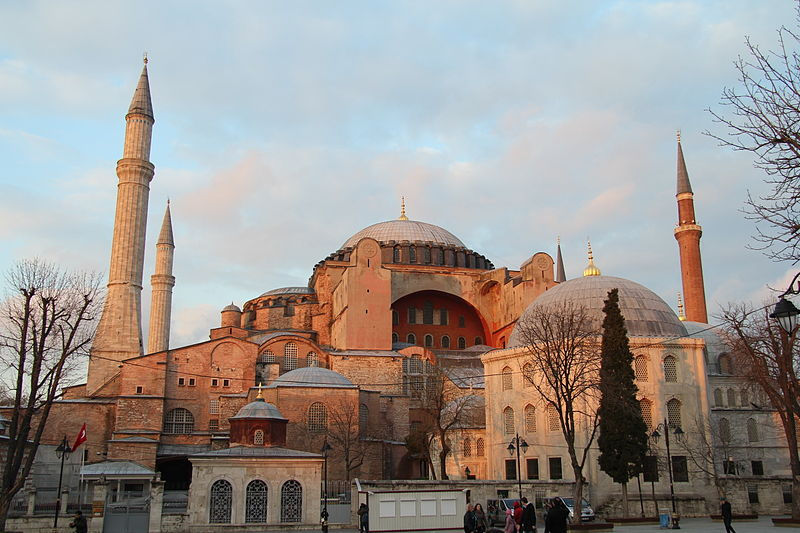
The Hagia Sophia Grand Mosque/Ayasofya-i Kebir Cami-i Şerifi, with its innovative architecture, rich history, religious significance, and extraordinary characteristics has been fighting against time for centuries, being once the largest Eastern Roman Church in İstanbul. Constructed three times in the same location, it is the world’s oldest and fastest-completed cathedral. With its domes that look like hanging in the air, monolithic marble columns, and unparalleled mosaics, is one of the wonders of the world’s architectural history.
What caught me the most about this wonderful place is the fact that the image of the Holy Mary (Virgin Mary) in Hagia Sophia is covered by a white curtain as a sign of respect and adherence to Islamic traditions. When Hagia Sophia was converted from a museum back into a mosque in July 2020, certain Christian iconography, including the Virgin Mary and other depictions, were respectfully concealed during prayer times. Nobody broke it, destroyed it, or removed it, just respected it and hides with a delicate white curtain!
This practice aligns with Islamic teachings, which generally prohibit the display of human or animal representations in places of worship to maintain the focus on Allah's oneness. Outside of prayer times, the curtain may be removed to allow visitors, including non-Muslims, to view the historical Christian mosaics, preserving Hagia Sophia's cultural and historical significance as a site that bridges Christian and Islamic heritage. The Hagia Sophia is a prime example of the importance of preserving cultural heritage, regardless of religious shifts. Unlike places that are destroyed due to differing beliefs, Hagia Sophia shows how a structure can serve multiple purposes, uniting history and people under one roof.
As an art teacher, I was familiar with the work of the famous artist Antoni Gaudi and how he has an entire neighborhood in Barcelona dedicated to his modern surrealistic architectonic projects. But one in particular stands out due to the unconventional structure, which endures wars, economic challenges, and technological advancements while remaining a masterpiece in progress: La Sagrada Família, in Barcelona - Spain.
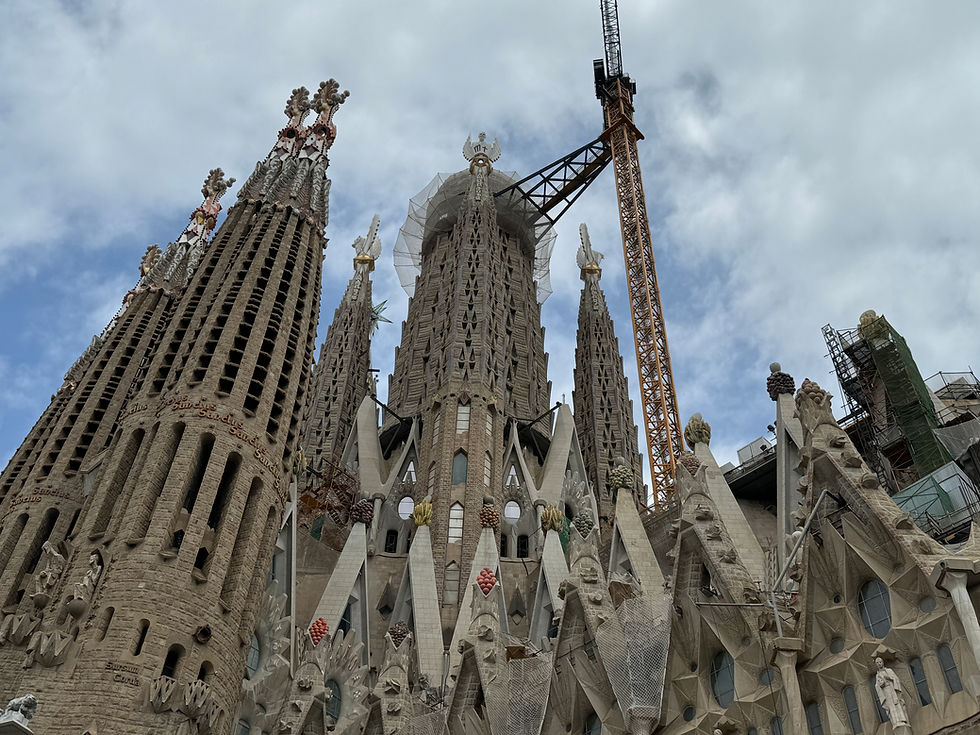
The Sagrada Familia in Barcelona is one of the most monumental religious structures in the world. Designed by Antoni Gaudí, its organic forms create a sense of divine beauty that leaves visitors fascinated, as it did to me. Unlike most cathedrals, it remains unfinished and continues to evolve over time. While its architectural brilliance is undeniable, its immense popularity brings challenges, particularly in a city struggling with mass tourism.
Gaudí devoted the final years of his life entirely to this project, knowing he wouldn’t see it completed. In 1926, he was tragically hit by a tram and passed away, leaving behind sketches and models for future architects to follow. Construction slowed due to wars, funding shortages, and evolving interpretations of his vision. Now, with modern technology, the basilica is finally expected to be completed by 2026, exactly a century after Gaudí’s death. Yet, even in its unfinished state, the Sagrada Familia remains a global symbol of faith, dedication, and artistic genius.

Stepping inside, I was immediately struck by the beauty of light filtering through stained glass windows, casting ethereal hues across the walls. The towering columns reminded me of tree trunks, making the entire space feel like a sacred forest. Raised Catholic, I felt the deep spiritual presence within the basilica, but I also struggled with the intense crowds. Visiting in the summer of 2024, I saw firsthand how Barcelona’s overtourism crisis was affecting locals, with protests against the influx of visitors and restrictions on short-term rentals. Inside, the huge number of people made it difficult to fully absorb the peaceful atmosphere that Gaudí envisioned.
Despite the challenges, the Sagrada Familia remains one of the most unique and powerful religious sites in the world. It is a place that shows resilience, patience, artistic techniques, and the ability of architecture to inspire faith and wonder. But since my visit, I keep thinking that when the final stone is placed, will it still hold the same magic, or will its spiritual essence be overshadowed by the chaos of tourism? I believe only time will tell, but for now, it stands as a remarkable, unfinished dream—one that continues to rise toward the heavens, just as Gaudí intended.
The Christ the Redeemer statue is located at the top of Corcovado Mountain, watching over Rio de Janeiro and my hometown, Niterói. For many, it’s an iconic tourist attraction, one of the Seven Wonders of the Modern World, but for us, Cariocas, it means so much more. Raised Catholic in Brazil, I grew up understanding Christ the Redeemer as more than a statue—it was a symbol of faith, love, and unity. His open arms embrace the entire city, showing the spirit of welcoming, resilience, and warmth that defines Rio and its people. Seeing from the streets below or up close on Corcovado Mountain, the presence of the Redeemer brings comfort and inspiration to those who visit.

My must-stop visit every time I go to Rio de Janeiro: Christ the Redeemer is part of our culture as Cariocas and Christian devotes.

What many don’t realize is that the journey to Christ the Redeemer has been transformed by modern technology, making it more accessible than ever. Originally, reaching the statue required a steep hike, but today, visitors can take a scenic train ride up the Tijuca Forest or use a network of elevators and escalators installed in recent years. These improvements allow elderly visitors, people with disabilities, and families with children to experience the 360-degree views of Rio without difficulty. The statue itself, completed in 1931, was an engineering achievement of its time, made of reinforced concrete and soapstone, which helps it withstand the region’s weather conditions.
Beyond its monumental presence, Christ the Redeemer is also a living part of the city's culture and celebrations. A small chapel beneath the statue is available for intimate weddings and religious ceremonies, accommodating only about 20 people, offering a once-in-a-lifetime setting for those who wish to say their vows in one of the most symbolic places in Brazil. Additionally, light projections now illuminate the Redeemer, changing colors to mark important occasions, like international humanitarian causes or local festivities.
For Cariocas, Christ the Redeemer is one of our favorite landmarks, but also a symbol of faith, a cultural icon, and a reminder of the deep connection between the city, its people, and its history. Overlooking both Rio and Niterói, it witnesses the joys, struggles, and dreams of those below. No matter how many times I see it, from the beaches, the streets, or even from an airplane window, it never loses its power to inspire me, and give me this great sense of gratitude for being Brazilian!

The Grand Palace in Bangkok is one of the favorite temples that I visited in Bangkok, showing the Thai connection with craftsmanship, spirituality, and history. Walking through its structures, golden rooftops, and colored mosaics, I was mesmerized by the majesty of the place. The palace is considered the spiritual and cultural heart of Thailand, housing the sacred Emerald Buddha—one of the country’s most revered religious icons. Every inch of the complex reflects the rich traditions and Buddhist beliefs that define Thai identity.
Beyond the good amount of golden surfaces, the place serves as a very important the spiritual symbol of Thai Buddhism. While many visitors admire its beauty, fewer realize its deep religious significance—just as the Five Pillars of Islam define Muslim life and the Seven Sacraments shape Catholic spirituality, Buddhism has its own core principles that are reflected in this sacred site.
One of the palace’s most revered spaces is the Temple of the Emerald Buddha (Wat Phra Kaew), home to the legendary Phra Kaew Morakot, a sacred Buddha image believed to offer protection to the Thai kingdom. Unlike other temples where monks reside, Wat Phra Kaew is reserved for royal ceremonies and Buddhist devotion, reinforcing the close connection between Thailand’s monarchy and Buddhism.
The Core Teachings of Buddhism Reflected in the Grand Palace
Buddhism, particularly the Theravāda tradition practiced in Thailand, is guided by the Four Noble Truths and the Eightfold Path, which lead to enlightenment (Nirvana). Visitors to the Grand Palace can see these teachings reflected in its sacred atmosphere:
The Four Noble Truths – Just as the Buddha taught that life is full of suffering but can be overcome through wisdom and detachment, the palace’s art and architecture remind visitors of the impermanence of life, urging mindfulness and self-awareness.
The Eightfold Path – The Grand Palace represents Right Thought, Right Mindfulness, and Right Conduct, as Thai Buddhists visit to meditate, pay respects, and seek blessings.
One particularly fascinating Buddhist tradition is merit-making, where believers perform good deeds—such as offering flowers, lighting incense, or donating to monks—to accumulate good karma for this life and future rebirths. This is why you’ll often see locals kneeling in prayer, holding lotus flowers, and placing gold leaf on sacred statues around the temple grounds.
Having explored many religious sites around the world, I couldn’t help but connect this experience to my ongoing fascination with restoration and preservation. In another post, I wrote about the importance of restoration in safeguarding traditional art forms and cultural heritage, and nowhere is this clearer than in the Grand Palace. Over centuries, Thai artisans have carefully maintained and restored the delicate details of the complex, ensuring that its beauty remains intact despite the passage of time. The murals, delicate carvings, and gold leaf decorations are relics of the past that must be maintained, considering that it is part of the story of those who keep these traditions alive.
As I mentioned above, the Grand Palace keeps inside its walls the Emerald Buddha, enshrined inside Wat Phra Kaew. Despite its name, this revered statue is actually carved from a single piece of jade. The Buddha’s robe is changed three times a year by the King of Thailand himself, marking the transition of seasons and reflecting the sacred connection between the monarchy and Buddhist tradition. Photos are prohibited in this area, but I found an image online so you can see how magnificent this tradition is.

One thing that sparkled my arts teacher curiosity was the amount of statues and figures in funny poses or facial expression. I discovered that the many images surrounding the gardens of the palaces are called Ruesi. They even have a park dedicated to this type of statues. They represent Thai traditional healers, wise men, or ascetics, known for their deep meditation and knowledge of herbal medicine. Locals often say these statues represent hermits or sages, believed to possess deep knowledge of meditation and healing arts. Some even joke that they symbolize listening closely to the voices of the spirits or eavesdropping on the universe's secrets (many of those were looking like they were indeed gossiping or bored by frivolous stories of the tourists passing by!). The Ruesi figures are associated with good fortune, protection, and enlightenment, and one superstition tells that rubbing their ears or whispering a wish to them could bring knowledge and guidance. In Buddhism, laughter and joy are often seen as part of spiritual wisdom, reminding visitors that enlightenment does not always have to be solemn—it can also be filled with lightness and humor.
Much like La Sagrada Familia, which remains unfinished yet continuously captivates visitors, or Sacré-Cœur, which brings pilgrims with its spiritual depth, the Grand Palace is an evolving symbol of faith and heritage. Despite its centuries-old history, it remains a living religious site, adapting to new generations while preserving its spiritual and artistic legacy.

Built on a rock formation by the Indian Ocean, Tanah Lot Temple gave me an incredible experience and inspiration. As the waves crash against the base of the temple, it becomes clear why this sacred site holds such deep significance in Balinese Hinduism. Tanah Lot represents the balance between human existence, nature, and spirituality, embodying the harmony of elements—a central concept in Balinese culture.
Built in the 16th century, Tanah Lot is one of Bali’s sea temples, a network of coastal shrines meant to protect the island from evil spirits. The temple is dedicated to Dewa Baruna, the sea god, and its position is on a rock that is surrounded by water during high tide. Local legends tell of a giant sea serpent that guards the temple, believed to have been created from a priest’s scarf to protect the sacred site. Whether you believe the myth or not, standing there as the sunset turned the sky into hues of gold and crimson, I could feel the deep spiritual energy of the place

Unlike other temples I have visited, Tanah Lot is not meant to be freely accessible to all visitors—only Balinese Hindu priests and worshippers can enter the main temple. However, the surrounding landscape, cliffs, and ocean views create an immersive spiritual experience for anyone who visits. Watching the tide change, revealing the temple’s rocky path for a short period each day, reinforced the ephemeral beauty of the moment.
Beyond its religious significance, Tanah Lot is an example of how sacred sites interact with their environment, rather than overpowering it. The temple’s resilience against time, tides, and erosion has been preserved through careful restoration efforts, much like other cultural heritage sites I’ve written about. The Balinese belief in Tri Hita Karana—harmony between people, nature, and the divine—is deeply felt here. You can come for the history, the architecture, or simply the beauty of the view, and for sure you will find that Tanah Lot is a place where art, faith, and nature are together in a truly unforgettable way.
Understanding and appreciating cultural diversity through architecture, festivals, and traditions is not just an academic exercise—it is a way to cultivate empathy, global awareness, and artistic inspiration. By examining these cultural elements, we can see how history, belief systems, and artistic traditions interconnect, shaping the way societies express themselves. In my IBDP Visual Arts class, this comparative study allows students to not only learn about different traditions but also reflect on how their own identities are influenced by cultural heritage. Art becomes a bridge between the personal and the universal, allowing students to translate their discoveries into meaningful creative work.
I hope you all be able to visit amazing places around the world and learn in depth the importance of those cultural architectonic places and how to keep the traditions alive!
Ms. Mila Vasconcelos


Comments